
By Rachel Hendricks, Contributor
Something's shifted. And it isn't shifting back.
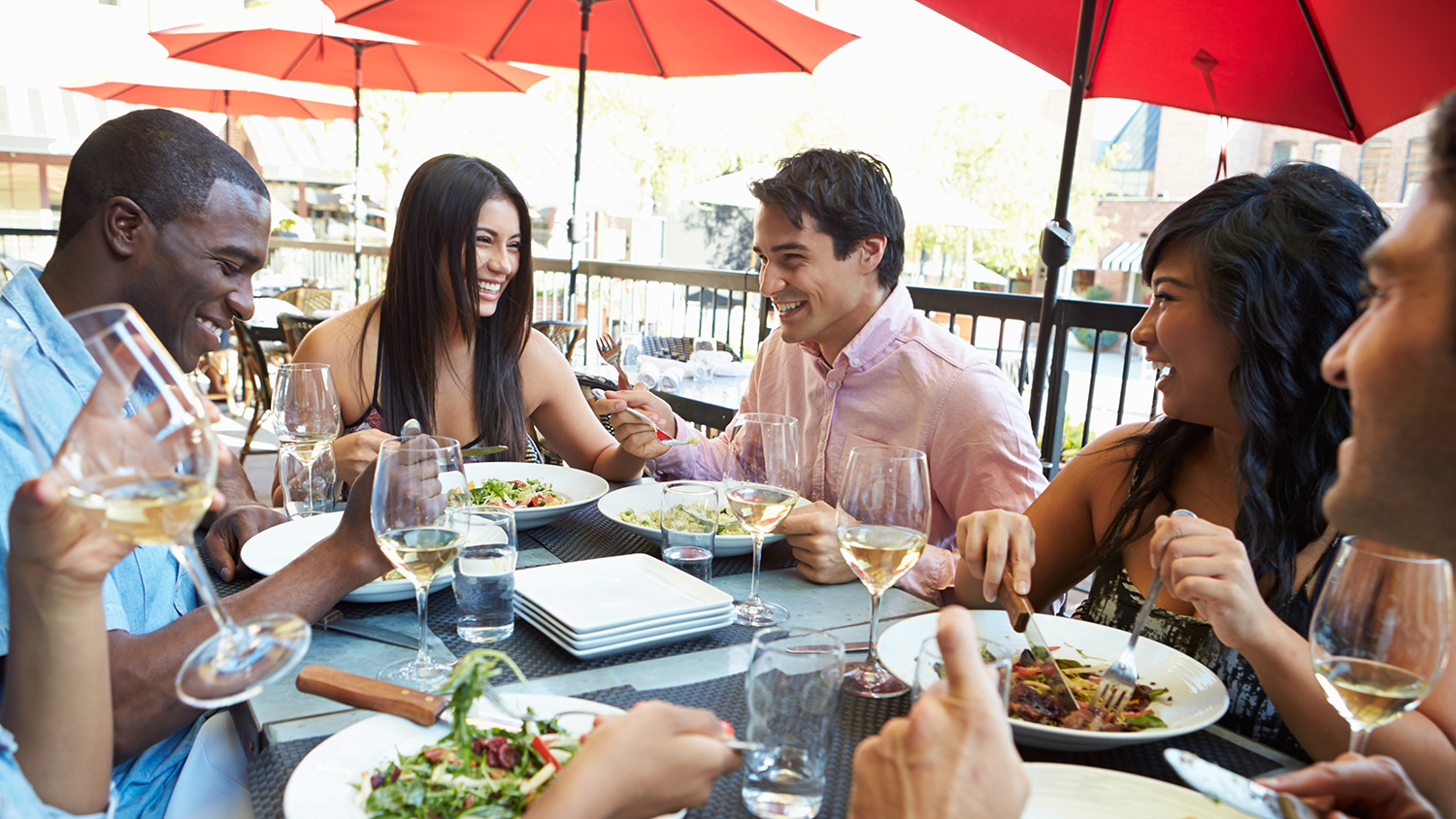
The National Restaurant Association found that three out of four adults now feel safer eating outside than inside a restaurant — a stat that's held steady since 2020 and keeps climbing.
Outdoor dining spaces aren't the pandemic backup plan anymore; they've become the main attraction for a huge chunk of your potential customers. You've probably seen it yourself — a half-empty dining room while every patio seat is taken.
That unused sidewalk or dead parking lot next to your building? It might be the highest-ROI square footage you're not using. Here's how to get it right.
Timing Is Everything: Knowing When to Take Your Business Outside
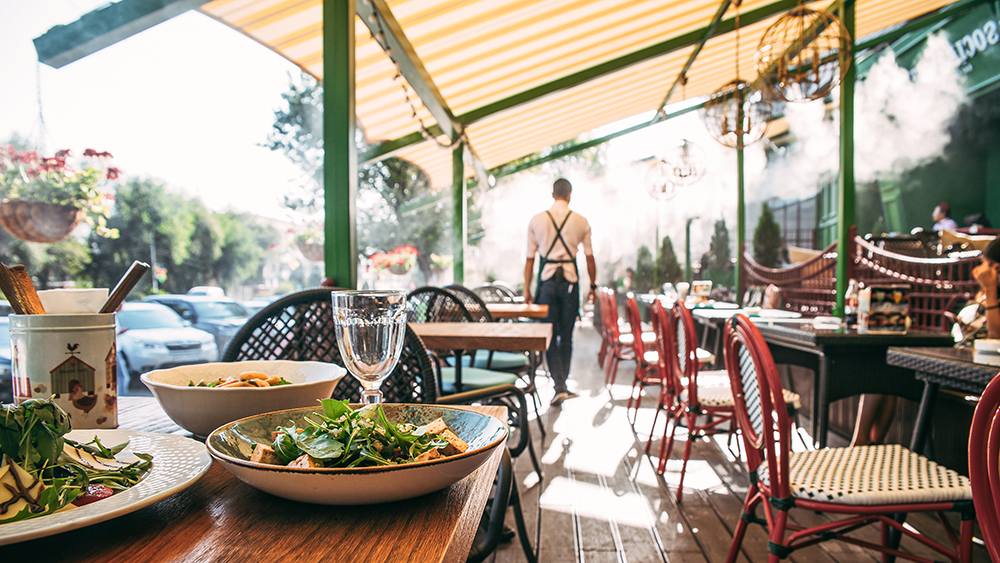
Panic moves kill patios. A restaurant owner sees a competitor drop tables outside in June, freaks out, and by mid-July has thrown together something that screams "we did this in a weekend."
Which they did. And guests can tell.
Look at your local foot traffic before doing anything else. Austin and Nashville? The outdoor season runs from March through November easily. Chicago or Minneapolis — obviously tighter, but those compressed months carry serious per-week value if you prepare for them instead of winging it.
But the question goes way beyond weather. You need to always stay on your toes because the best time for a business move depends on lease terms, permits, cash flow, and what the market around you is actually doing.
Fast Casual reports that adding outdoor dining spaces can push revenue up by 30%. In one case, a $200K patio investment brought back $500K in new sales. Numbers don't lie — but they only work when demand is real, and your timing matches it.
Do your permit research and vendor outreach in winter. Prices drop, contractors aren't booked solid, and you won't be scrambling with every other operator come April.
Layout and Design for Outdoor Dining Spaces That Actually Work
Here's where most people get it wrong. The instinct is to jam as many tables in as possible because more seats should mean more money, right? Except it doesn't. A cramped patio slows down service, stresses out your staff, and makes guests feel stacked on top of each other.
Nobody's lingering for dessert in that environment.
Flow has to come first. Your servers need at least 36 inches between tables to move without doing that awkward sideways shuffle. ADA compliance isn't optional — accessible paths need to be planned from day one, not retrofitted after someone complains. And every table should have a sightline to a server station so guests aren't waving into the void trying to flag someone down.
Spend real money on furniture. Fermob and BFM Seating make commercial pieces that survive years of heavy use and rearrange quickly for different group sizes. Those $15 resin chairs from the hardware store? They crack by August. Your patio ends up looking less "charming bistro" and more "uncle's backyard BBQ." Don't go there.
One more thing nobody talks about enough — shade. Outdoor dining spaces with zero shade coverage sit empty on hot afternoons. Pergolas or retractable awnings beat umbrellas by a mile for both function and aesthetics.
Weather-Proofing Your Investment
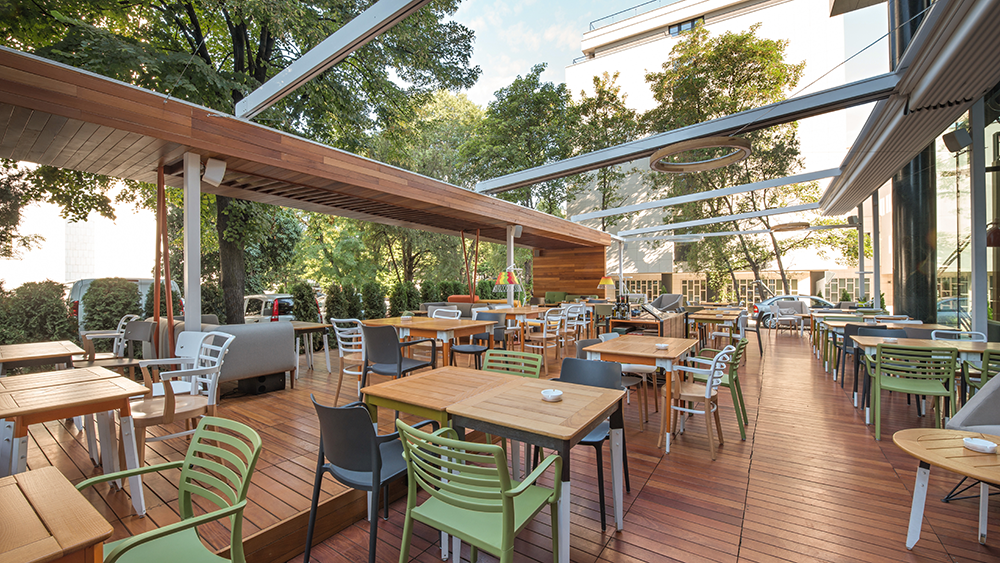
Rain shouldn't cancel your revenue. Neither should it be a cold Tuesday in October. Propane patio heaters — AZ Patio Heaters makes solid ones — can extend your season six to eight weeks on both ends.
Think about that — six weeks of extra coverage in spring, six more in fall. Most operators just leave that money on the table. Retractable awnings deal with sudden rain without herding everyone indoors. Tempered glass wind barriers or heavy planters block gusts while keeping the space feeling open.
And then there's drainage. The thing everyone forgets until a 20-minute thunderstorm turns their gorgeous patio into a wading pool. Proper grading and drainage channels are a fraction of your total build cost. Skip them, and you'll be canceling reservations every time the forecast looks iffy. That's a problem you do not want.
Setting the Mood: Lighting, Sound, and Greenery
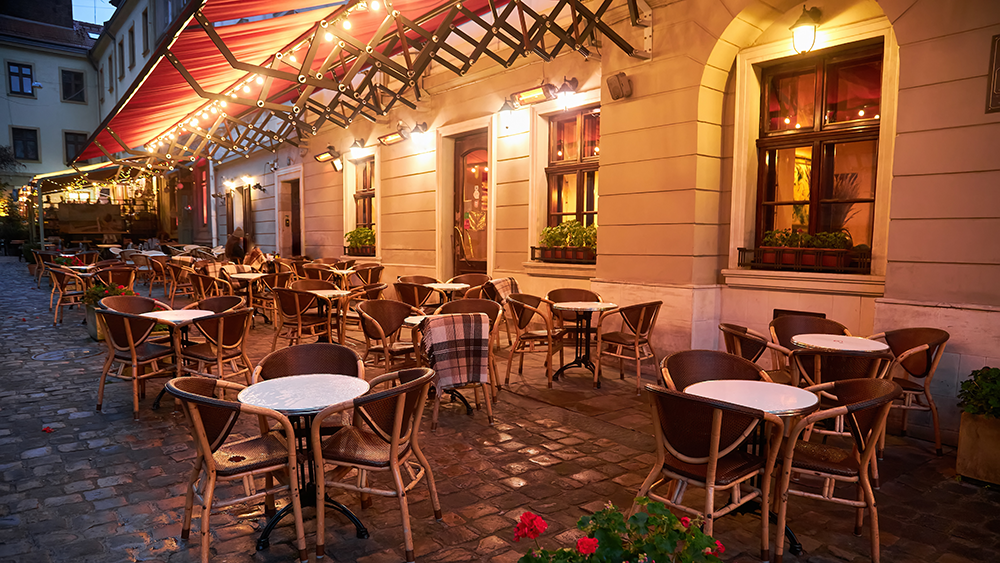
Ambiance is not decoration. It's a revenue strategy with a dimmer switch. String lights are the obvious play here, the kind you see draped across every Brooklyn rooftop worth its cocktail menu. They photograph incredibly well, too, which matters more than you'd think when half your marketing runs on Instagram.
Sound is where things get tricky. Keep music below conversation volume. That's it. That's the rule. Guests who have to yell over your playlist leave faster and tip less — it's been studied to death. If your outdoor dining spaces sit near a busy street, dense hedging or sound-dampening panels can cut traffic noise without making the space feel closed off.
Plants pull everything together. Potted olive trees, jasmine climbing a trellis, a living wall if you've got the budget. Danny Meyer's been saying it for years — the best restaurant spaces feel deliberate, not thrown together. Every element earns its spot, or it shouldn't be there at all.
Marketing Your New Outdoor Space
Cool, you built a patio. Who knows about it?
First thing — update your Google Business Profile. Add new photos, work "patio" and "outdoor seating" into the description, and adjust hours if they're seasonal. This one move generates more local search visibility than most paid ad campaigns people waste money on.
Your outdoor setup is basically free content for Instagram and TikTok. Set up a couple of tables during golden hour, have someone shoot a quick 15-second reel, and post consistently.
Launch an outdoor-only menu item to build some buzz — limited-time stuff works great because scarcity makes people act. "Only available on the patio" is a surprisingly effective line.
Partner with what's already happening around you. Farmers' markets, block parties, street fairs — people at these events are outside and hungry. That's your audience, already assembled.
The Long Game
Outdoor dining spaces aren't a fad to ride for one summer. They're infrastructure. The restaurants doing this well treat timing, design, weather prep, ambiance, and marketing as pieces of one connected strategy — not a checklist of unrelated projects they chip away at whenever someone has a free afternoon. That's the difference between a patio that pays for itself and one collecting bird droppings.
Start small if cash is tight. A handful of tables, string lights, decent shade. See what guests respond to, ask for feedback, then expand based on what you learn. People are already out there looking for a good place to sit. Give them yours.

About the Author
Rachel Hendricks is a restaurant operations consultant who works closely with independent restaurant owners to improve how their spaces function and perform. Over the past 12 years, she has helped teams rethink layouts, fix service bottlenecks, and turn outdoor areas into steady revenue drivers. When she’s not working with clients, she keeps up with industry trends and shares practical insights drawn from real, on-the-ground experience.
